
Waterproofing Company in Ajman
Among waterproofing companies in Ajman, Dubai Technical Works covers roofs, terraces, basements, bathrooms, water tanks, pools and balconies across villas, towers and industrial units. Systems start at AED 45 per sqm, a surveyor reaches active leaks within 24 to 48 hours, every membrane is flood tested before reinstatement, and warranties run up to 10 years.
Call +971 55 711 3252 for a free leak survey.
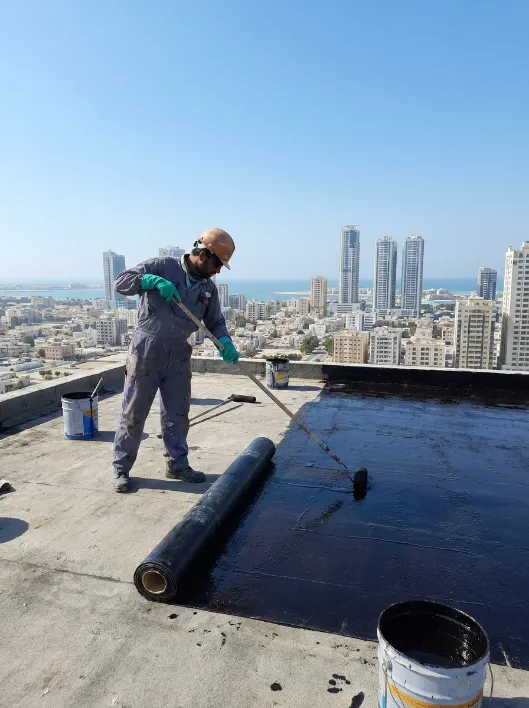
Waterproofing Services Across Ajman and the Northern Emirates
We work on private villas, apartment towers, labour accommodation, warehouses, factories, showrooms, mosques, schools, and government buildings.
Two kinds of jobs come through. New construction waterproofing applied to a fresh slab before screed and finishes. And remediation, where a building is already leaking, and the owner needs it stopped before tenants start complaining.
Our clients include homeowners, villa owners, landlords, property managers, developers, main contractors, and facility management companies.
Coverage runs across Ajman city and its residential districts, the industrial areas and free zone, the newer developments at Al Zorah and Emirates City, and out to Masfout and Manama. We also cover Sharjah, Umm Al Quwain, Ras Al Khaimah and Dubai through our main waterproofing division.
Where We Waterproof
Roof and Terrace Waterproofing
Basement walls, foundation slabs, retaining walls and underground parking. Ajman’s water table sits high across much of the built area, so basements face constant pressure rather than occasional wetting. Details on roof waterproofing.
Basement and Substructure Waterproofing
Basement walls, foundation slabs, retaining walls and underground parking. Abu Dhabi’s water table sits high in many areas, so basements face constant hydrostatic pressure rather than occasional wetting. That rules out systems designed for positive-side protection only. More on basement waterproofing.
Bathroom and Wet Area Waterproofing
Bathroom floors, shower zones, walls, drains and pipe penetrations. Grout is porous by design and water passes straight through it. The membrane beneath the tile is the barrier. More on bathroom waterproofing.
Water Tanks and GRP Lining
Concrete tanks, base slabs, pipe penetrations and overflow channels lined in GRP. Tanks holding potable water need compliant food-grade linings, which we confirm before quoting rather than after.
Swimming Pools and Water Features
Pool shells, floors, steps, skimmers and light niches. Pools leak at penetrations far more often than across the flat shell, so detailing around fittings decides the job. See pool waterproofing.
Balconies, Podium Decks and Planter Boxes
Balcony slabs, balustrade fixings, planters and decks over occupied space. Planters need a root barrier above the membrane, or roots find the smallest lap within a few seasons.
External Walls, Facades and Parapets
Wall cracks, facade joints, window perimeters and exposed concrete. Wind-driven rain in the winter storm months pushes water through hairline cracks that look harmless in dry weather.
Industrial Floors and Epoxy Coatings
Warehouse floors, plant rooms and workshops across Ajman Industrial Area. Systems that handle forklift traffic, chemical spills, and washdown. See epoxy floor coating.
Lift Pits, Expansion Joints and Crack Injection
Lift pits sitting below the water table level, movement joints, and structural cracks are sealed by PU or epoxy injection. PU expands on contact with water, which makes it right for a crack actively passing water.
Find the Leak Before You Buy a Membrane
Thermal Imaging and Moisture Mapping
Thermal cameras show where moisture sits inside a build-up, and moisture meters confirm it. Together they map the wet zone without opening the whole roof.
Flood Testing and Dye Testing
We pond water on a suspect area and watch below. On bathrooms and balconies, this isolates the failure within 24 hours. Dye tracing works where water enters at a specific drain or penetration.
Why the Stain Is Rarely Under the Failure
Water tracks laterally through screed and across slabs before it drops. A stain in a third-floor ceiling can come from a terrace detail twenty metres away.
Roughly one in four leaks we survey turns out to be plumbing or AC condensate rather than waterproofing. Our leak detection team checks that before anyone quotes a membrane.
Why Waterproofing Fails in Ajman
Roof Surface Temperatures and Membrane Breakdown
Ambient air reaches the mid-40s in summer, but a dark exposed membrane on a flat roof runs far hotter. That heat softens cheap bitumen and breaks down coatings never rated for it.
High Water Table and Hydrostatic Pressure
Ajman is compact, low-lying and coastal, with a creek running through it. Groundwater sits close to the surface across much of the emirate. Basements and lift pits face constant upward and lateral pressure, so systems designed only for positive-side protection get pushed off the wall.
Coastal Salinity Near the Corniche and Creek
Saline groundwater drives chlorides into concrete. Once they reach the reinforcement, the steel corrodes, expands, and cracks the structure from inside. Properties near the Corniche and Ajman Creek see this earliest.
Detailing Failures at Upstands, Drains and Penetrations
Flat areas rarely fail. Parapet upstands, rainwater outlets, pipe penetrations and movement joints fail constantly. A perfectly applied field membrane with a badly terminated upstand still leaks.
Waterproofing Systems and Where Each Belongs
Torch-On Bituminous Membrane
Reinforced modified bitumen sheet applied in laps. The workhorse for concrete roofs under screed or tile. 15 to 20 years when properly detailed and protected. See membrane waterproofing.
Liquid Applied Polyurethane Membrane
Seamless and flexible, bridging hairline cracks that would split a rigid coating. Right for roofs with complex geometry and many penetrations. 10 to 15 years exposed.
Polyurea Spray Coating
Spray-applied, cures in seconds, extremely tough. Earns its place on large commercial roofs and tanks where downtime costs money. See polyurea coating.
Cementitious and Polymer-Modified Systems
Cement slurry bonding directly to concrete. Cost-effective for bathrooms, wet areas, and tanks under tile. Rigid, so it needs a stable substrate.
Crystalline Waterproofing for Concrete
Reactive chemicals grow crystals inside the concrete capillaries. Works against negative-side pressure, which matters in Ajman basements. See crystalline waterproofing.
GRP Lining for Tanks and Wet Areas
Glass-reinforced polyester laminated in place, forming a jointless basin independent of the structure. Strongest option for tanks, sunken slabs and pools that already leaked.
Combo and Insulated Roof Systems
Membrane plus thermal insulation in one build-up, cutting roof surface temperature and the cooling load underneath.
PU and Epoxy Injection Grouting
Pressure-injected resin into cracks and construction joints. PU for active water, epoxy for structural bonding on dry cracks. We apply Sika, Mapei, Fosroc, Drizoro, and BASF MasterSeal systems, and the product name goes on your quote.
Roof Insulation and Combo Systems — Worth It in Ajman?
Combo systems put insulation under the membrane. The roof surface runs cooler, and so does the slab beneath it.
On a villa running AC ten months a year, the FEWA bill difference is real money over a decade, and the membrane itself lasts longer because it cycles through a narrower temperature range.
The honest caveat: a combo system costs 40% to 60% more upfront. We price insulated and non-insulated side by side and let you decide, rather than defaulting to the more expensive option and calling it standard.
Overlay or Strip Out? The Existing Roof Decision
Overlay saves 30% to 40% against a full strip-out, and it works when the existing membrane is bonded, the substrate below is dry, and the roof is structurally sound.
It fails when moisture is trapped in the insulation or screed. Sealing a wet build-up under a new layer traps the water, and the first hot season drives it into blisters that lift the new membrane off.
We take core samples and measure moisture content before recommending an overlay. Reading a roof from the surface is guessing, and it is why some Ajman roofs have been overlaid twice and still leak.
Repair, Patch or Re-Waterproof?
Isolated detail failure on a sound membrane is a repair job. Expect AED 1,500 to 7,000 for a drain collar, an upstand, or a localised tear.
Two or more failure points, or a membrane past twelve years, means replacement. Patching an aged system buys one season, and you pay for the screed and tile reinstatement twice.
Transparent Waterproofing Prices in Ajman (2026)
Free Site Survey and Leak Investigation
The survey is free and takes 2 to 4 hours. We inspect, thermal-scan where useful, take core samples where needed, identify the source, and issue a written report naming the cause, the recommended system, and a fixed price.
Waterproofing Price List
System | Price (AED/sqm) |
Cementitious coating | 45 – 85 |
Liquid applied PU membrane | 65 – 135 |
Torch-on bituminous membrane | 55 – 115 |
Polyurea spray coating | 150 – 310 |
GRP lining | 170 – 330 |
Epoxy floor coating | 85 – 210 |
Crystalline waterproofing | 50 – 105 |
Combo insulated roof system | 120 – 250 |
Crack injection (per metre) | 200 – 520 |
Typical Project Costs
Project | Price (AED) |
Apartment bathroom | 2,500 – 7,000 |
Balcony | 3,000 – 8,500 |
Villa roof, 200sqm | 16,000 – 35,000 |
Concrete water tank | 8,500 – 24,000 |
Basement | Quoted after survey |
Warehouse roof, 1,000sqm | 65,000 – 150,000 |
Tile, Screed and Reinstatement Costs
The membrane is roughly half a bathroom or balcony job. Tile removal and disposal runs AED 55 to 110 per sqm, screed repair AED 65 to 140, and tile supply and laying AED 90 to 400 depending on the tile. Our quotes include reinstatement, handled by our own tiling team, and ceiling repainting where a leak has stained the unit below.
What Changes the Quote
Access and working height, whether the existing layer comes off, substrate repair, insulation, reinstatement, and phasing around occupied space.
Our Waterproofing Process and Timeline

Site Survey, Leak Investigation and Fixed Quote
Inspection, moisture mapping, source identification, written report, and fixed price. 2 to 4 hours.

Core Sampling and Substrate Assessment
Cores taken on existing roofs to confirm what is underneath and whether it is dry. This decides overlay versus strip-out.

Strip-Out, Cleaning and Surface Preparation
Failed layers removed, surface cleaned back to sound substrate, laitance and contaminants removed. One to three days.

Substrate Repair, Screed and Fall Correction
Cracks cut and filled, spalled concrete repaired, falls corrected to the drains. Water that ponds instead of draining shortens any membrane’s life. One to three days.

Priming and Detailing at Upstands, Drains and Penetrations
Primer applied, then reinforcement at every upstand, outlet, pipe collar and movement joint before the field membrane.

Membrane Application and Curing
System applied at specified coverage and thickness, then cured to manufacturer requirement. Two to five days.

Flood Test, Protection Layer and Handover
Hold test, protection board or screed, then handover with photos and warranty documents. Three to five days.
How Long Does Waterproofing Take?
| Area | Preparation | Application | Cure & Test | Reinstatement | Total |
|---|---|---|---|---|---|
| Bathroom | 1 day | 1 day | 3 days | 2–3 days | 6–8 days |
| Balcony | 1 day | 1 day | 3 days | 2 days | 6–7 days |
| Villa roof (200sqm) | 2–3 days | 3–4 days | 4 days | 3–4 days | 12–15 days |
| Water tank | 2 days | 2–3 days | 4 days | 2 days | 10–12 days |
| Basement | 3–5 days | 4–6 days | 4 days | 4–6 days | 15–21 days |
| Warehouse roof (1,000sqm) | 5–7 days | 7–10 days | 5 days | 3–5 days | 20–27 days |
The Flood Test — Proof Before Anything Goes Back On
We pond water across the membrane, mark the level, and hold it 48 to 72 hours. Photographed at both ends, with the space below checked for moisture before sign-off.
A contractor who screeds or tiles the day after the final coat has tested nothing. You find out whether the system worked once the finishes are down, which is the most expensive possible moment.
Ajman Municipality Rules and Building Approvals
What Ajman Municipality Requires for Waterproofing
Waterproofing of roofs, wet areas and below-ground structures forms part of the building works inspected under Ajman Municipality and Planning Department requirements. On permitted works, it must be completed and signed off before finishes go back on.
Building NOCs, Tower Access and Working Hours
Towers and managed buildings require contractor documentation before work starts: trade licence, public liability insurance, worker Emirates ID details and usually a refundable deposit. Add a booked service lift, a crane or hoist slot for roof material, an agreed debris route, and set working hours. Approvals run 5 to 10 working days, so we submit the day you accept the quote.
Working in Ajman Free Zone and Industrial Areas
Free zone and industrial sites have their own gate pass and contractor registration processes. We hold current documentation and handle the registration rather than turning up and being refused entry.
How to Evaluate a Waterproofing Contractor
Before awarding the job, ask for these six things.
- The system name and manufacturer datasheet, not just the word “membrane”
- Applicator certification for that specific system
- Detailing drawings for upstands, drains, penetrations and movement joints
- The test protocol and how long the hold will run
- The warranty document with exclusions written out
- Trade licence and insurance certificates, current and in the company’s name
A quote that names no system is not a quote. It is a price for an unknown product applied to an unknown standard.
Commercial and Industrial Waterproofing in Ajman
Warehouses, Factories and Industrial Floors
Large-span roofs across Ajman Industrial Area 1 and 2 and the free zone, plus epoxy floor systems built for forklift traffic and chemical exposure.
Labour Accommodation and Staff Facilities
Ablution blocks, kitchens and roofs where a failure disrupts hundreds of people at once. We phase block by block so no facility closes completely.
Schools, Mosques and Government Buildings
Occupied-building work with access control, noise limits and inspection requirements, scheduled around term dates and prayer times.Occupied-building work with access control, noise limits and inspection requirements, scheduled around term dates and prayer times.
Phasing Around Live Operations
Large roofs get sectioned so nothing is left open overnight, with temporary terminations at each day’s edge. A roof stripped faster than it can be closed is a flood risk, and the winter rain months are exactly when people rush that.
Emergency Leak Response in Ajman
Active leaks into occupied space get a surveyor within 24 to 48 hours. The first visit is containment and source identification, not a permanent fix.
Permanent systems go on once the substrate is measurably dry. A membrane applied over wet concrete blisters and debonds, which means paying for the job twice. We tell clients that even when they want it finished tomorrow.
Best Time of Year for Waterproofing in Ajman
October through April is the application window.
Summer roof surface temperatures push liquid systems past their application limits, solvent flashes off before the film can level, and torch-on work in 45°C ambient is both unsafe and inconsistent.
Planned re-waterproofing books from October and fills quickly, because every building owner in the emirate wants the roof closed before the winter rain. Emergency repairs run year-round with early-morning scheduling.
Recent Waterproofing Projects in Ajman
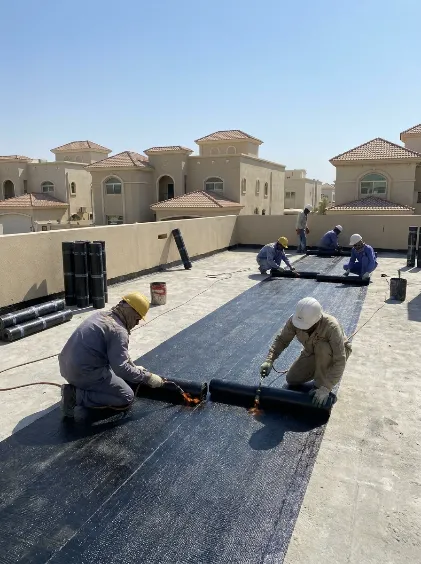
Villa, Al Rawda, 180sqm roof. Full strip-out after a failed overlay, torch-on membrane with new falls to the outlets. AED 26,400, thirteen days.
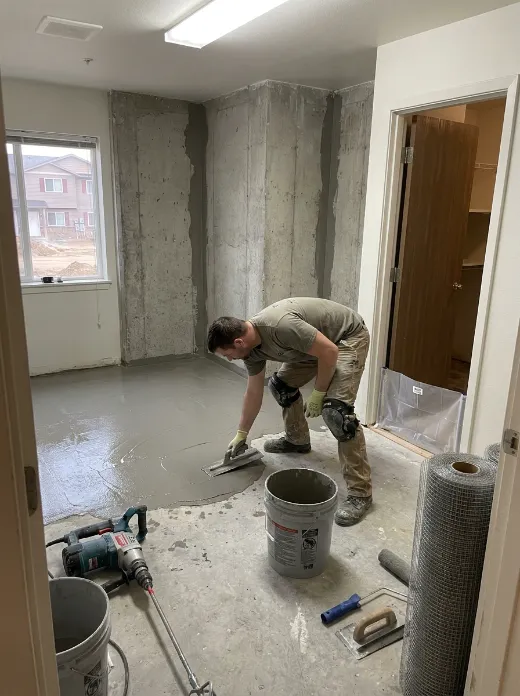
Apartment building, Al Nuaimiya, four bathrooms. Ceiling stains in the units below traced to failed drain details. Cementitious system, flood tested, retiled. AED 18,900, eleven days.
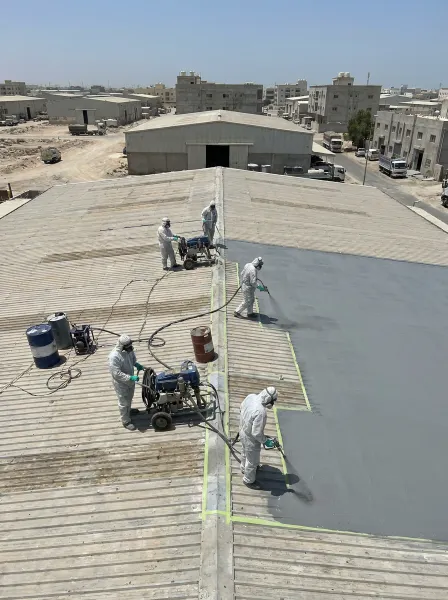
Warehouse, Ajman Industrial Area 2, 1,200sqm roof. Polyurea overlay after core sampling confirmed a dry substrate. Phased in sections to keep operations running. AED 128,000, eighteen days.
Areas We Cover Across Ajman
Why Choose Dubai Technical Works for Waterproofing in Ajman
Licensed, Insured Teams and Approved Applicators
Valid trade licence, public liability cover and worker insurance, with documentation ready for municipality and building submissions. Our applicators are trained on the systems we install.
Fixed Written Quotes Naming the System
The quote states the system, manufacturer, coverage rate, and price, including reinstatement. If we strip a roof and find structural concrete damage nobody could see, we stop and quote that separately for approval.
Flood Tested Before Reinstatement, Photographed
Every membrane is hold tested before screed, tile or protection goes back on. You see the photos before you pay for the reinstatement stage.
Warranty up to 10 Years by System
Polyurea 10 years, torch-on membrane 10, crystalline 10, liquid PU 7, cementitious 5. The warranty covers membrane and workmanship failure. Structural movement, third-party damage, and later penetrations drilled through the system are excluded, and we write that on the quote rather than mention it afterwards.
One Contractor for Waterproofing, Tiling, Plumbing and Making Good
A leaking bathroom needs waterproofing, plumbing and tiling. A stained ceiling needs repainting afterwards. We handle all of it.
What Our Ajman Clients Say
Two contractors had already overlaid the roof, and it still leaked. These guys cored it, showed me the wet screed underneath, and stripped it properly. First dry winter in three years.
Salem
Al Rawda
Four bathrooms leaking into the flats below and tenants threatening to leave. Phased so only one unit was out at a time, and they sent the flood test photos before retiling.
Rania
Building Owner, Al Nuaimiya
Told me straight that the ceiling stain was AC condensate, not the roof. Fixed that instead and saved me a roof job I didn’t need.
Imran
Al Mowaihat
FAQs
Frequently Asked Questions About Waterproofing in Ajman
Cementitious systems run AED 45 to 85 per sqm, torch-on membrane AED 55 to 115, liquid PU AED 65 to 135, and polyurea AED 150 to 310. A bathroom costs AED 2,500 to 7,000 complete, and a 200sqm villa roof costs AED 16,000 to 35,000, including reinstatement.
A 200sqm villa roof runs AED 16,000 to 35,000 depending on the system and whether the existing layer comes off. Overlay on a sound, dry substrate saves 30% to 40% against a full strip-out. Core sampling at the survey confirms which applies before you commit.
A bathroom takes 6 to 8 days including cure, flood test and retiling. A balcony takes 6 to 7 days, a villa roof 12 to 15, and a basement 15 to 21. A 1,000sqm warehouse roof runs 20 to 27 days. Add 5 to 10 working days for building approvals.
Torch-on membrane and polyurea last 15 to 20 years, liquid PU 10 to 15 years exposed, and cementitious 8 to 12 years under tile. Lifespan drops where water ponds instead of draining, where penetrations were drilled after application, or where upstand detailing was never done correctly.
Torch-on bituminous membrane for concrete roofs under screed or tile. Liquid PU where the roof has complex geometry and many penetrations. Polyurea where downtime costs money. For new buildings with thermal requirements, a combo insulated system handles heat and water together.
Yes, when the existing membrane is bonded, the substrate below is dry, and the roof is structurally sound. We core sample to confirm. Overlaying a wet build-up traps the moisture, and the first hot season drives it into blisters that lift the new layer off.
It costs 40% to 60% more upfront and cuts the cooling load beneath the roof, which shows on the FEWA bill over years. It also extends membrane life by narrowing the temperature range the membrane cycles through. We quote both options side by side rather than defaulting to the expensive one.
Thermal imaging and moisture meters map the wet zone, then flood or dye testing isolates the entry point. Water tracks laterally before it drops, so the stain is rarely under the failure. Around one in four leaks we survey turns out to be plumbing or AC condensate instead.
Yes. It is the only proof the system works. We pond water for 48 to 72 hours with a marked level, photographed at both ends, and inspect the space below. Covering a membrane without testing means discovering failures after the finishes are down.
Yes, and it needs the right approach. Groundwater sits close to the surface across much of Ajman, so basements and lift pits face constant pressure. Crystalline systems work against negative-side pressure, and below-ground membranes need protection boards and proper drainage to survive backfill.
Yes. GRP lining for concrete tanks, sunken slabs and pools, forming a jointless basin independent of the structure. Tanks holding potable water get compliant food-grade linings. Tank jobs run AED 8,500 to 24,000 depending on capacity and condition.
Waterproofing of roofs, wet areas, and below-ground structures falls under Ajman Municipality and Planning Department building requirements, and on permitted works, it must be completed before finishes go back. Towers and free zone sites separately require contractor documentation and gate passes, which take 5 to 10 working days.
Emergency repairs, yes, scheduled early morning. Planned work, no. Roof surface temperatures push liquid systems past their application limits, and solvent flashes off before the film levels. October through April is the proper window, and it books out from October.
Up to 10 years depending on system: polyurea, torch-on membrane, and crystalline at 10 years; liquid PU at 7; cementitious at 5. It covers membrane and workmanship failure. Structural movement, third-party damage, and penetrations drilled after installation are excluded, and we state that on the quote.
Book a Waterproofing Survey in Ajman Today
Tell us the property type, where the water is appearing, and when it started. We will survey, identify the source, and send a written quote with a fixed price.

Dubai Technical Works provides professional technical services in Dubai and reliable handyman services in Dubai for homes and businesses. We offer AC, electrical, plumbing, painting, waterproofing, CCTV, tiling, gypsum, and property maintenance services with skilled technicians, transparent pricing, and timely solutions.
Copyright ©Dubai Technical Works Designed BY Crew Innovations